


5 Reasons Impact Windows Become Hard to Open (And What to Do First)
2026-06-12
Salt, Moisture, and Corrosion Start Working Against You
In South Florida, impact windows don’t usually fail overnight—they slowly fight a losing battle against salt air and humidity. Over time, salt deposits creep into hinges, operators, and locking points, creating friction and internal corrosion. This is especially common in coastal condos where windows are exposed year-round. What to do first: stop forcing the window. Rinse visible hardware with fresh water and schedule a professional inspection before corrosion turns into permanent hardware damage.
Construction Dust and Debris Inside the Tracks
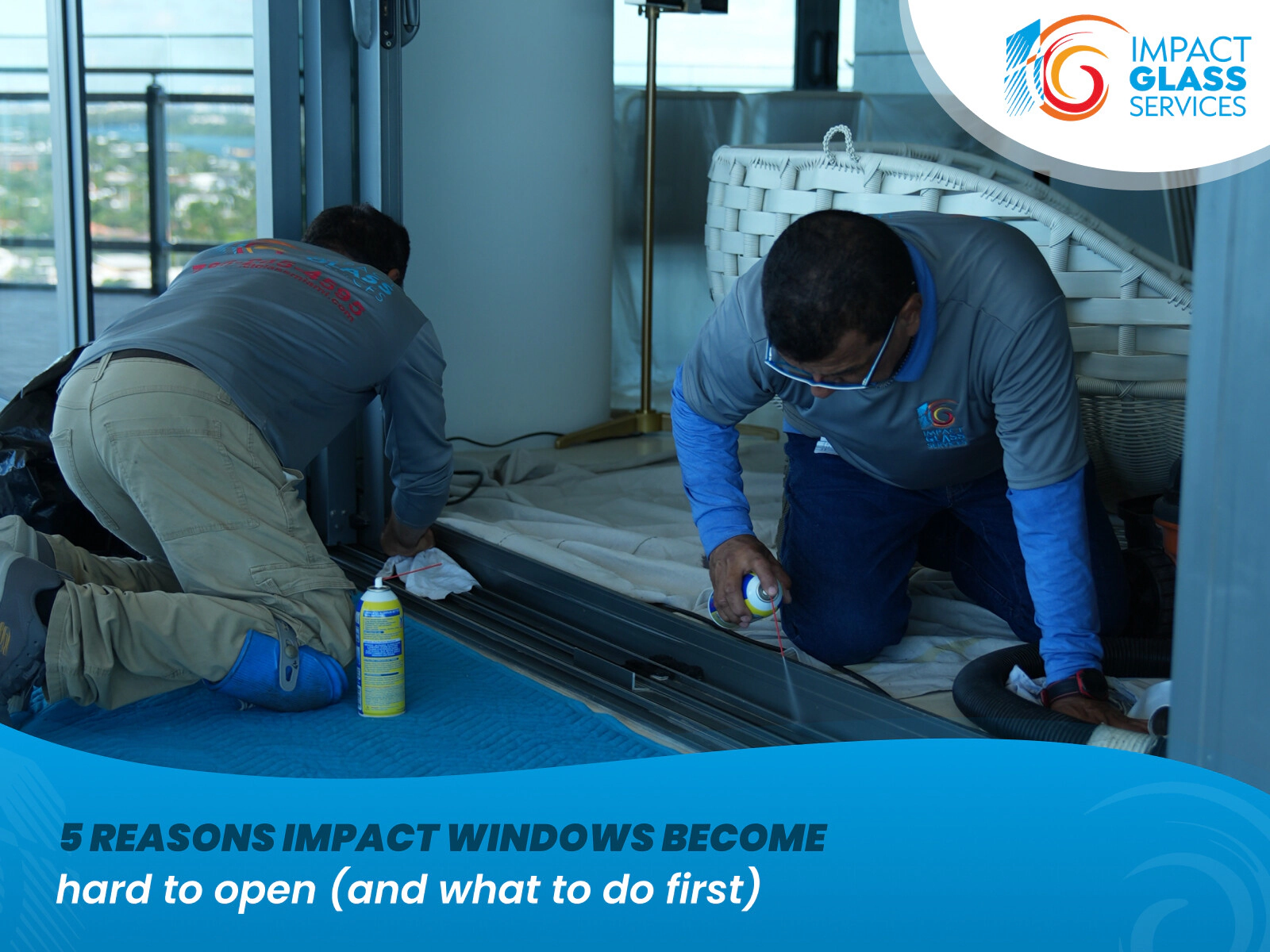
After concrete restoration, balcony repairs, or even nearby construction, fine debris often settles inside window tracks and operator channels. This grit acts like sandpaper, making the sash feel heavy or jerky when opening. Many owners assume the window is “failing,” when in reality it’s contaminated. What to do first: vacuum the tracks gently—never use grease or WD-40, which traps more debris and makes the problem worse.
Frame Movement and Structural Shifts
Buildings move. Thermal expansion, slab deflection, and post-restoration structural adjustments can slightly twist window frames out of square. Even a few millimeters of misalignment can overload hinges and operators on impact-rated units. What to do first: check if the window rubs on one corner or resists at a specific point—this is a red flag that alignment, not hardware, is the root issue.
Worn or Overloaded Hardware Components
Impact windows are heavy by design, and their hardware has strict weight limits. Over time, operators, friction hinges, and rollers wear down—especially if they’ve been forced while binding. This is one of the most common failure points we see in older installations.
Typical warning signs include:
- Grinding or clicking noises when opening
- Uneven resistance throughout the swing
- Handle spinning without moving the sash
- Window staying open only halfway
What to do first: stop using the window and have the hardware evaluated before a sudden failure leaves the sash stuck open or unsafe.
Bottom line: when an impact window becomes hard to open, forcing it is the fastest way to turn a small service issue into a major repair. A proper inspection—before parts snap or frames deform—can save thousands and extend the life of your windows without replacement.
For more information or to schedule a free consultation, call Impact Glass Services at 786-245-4595 or visit www.impactglassmiami.com