


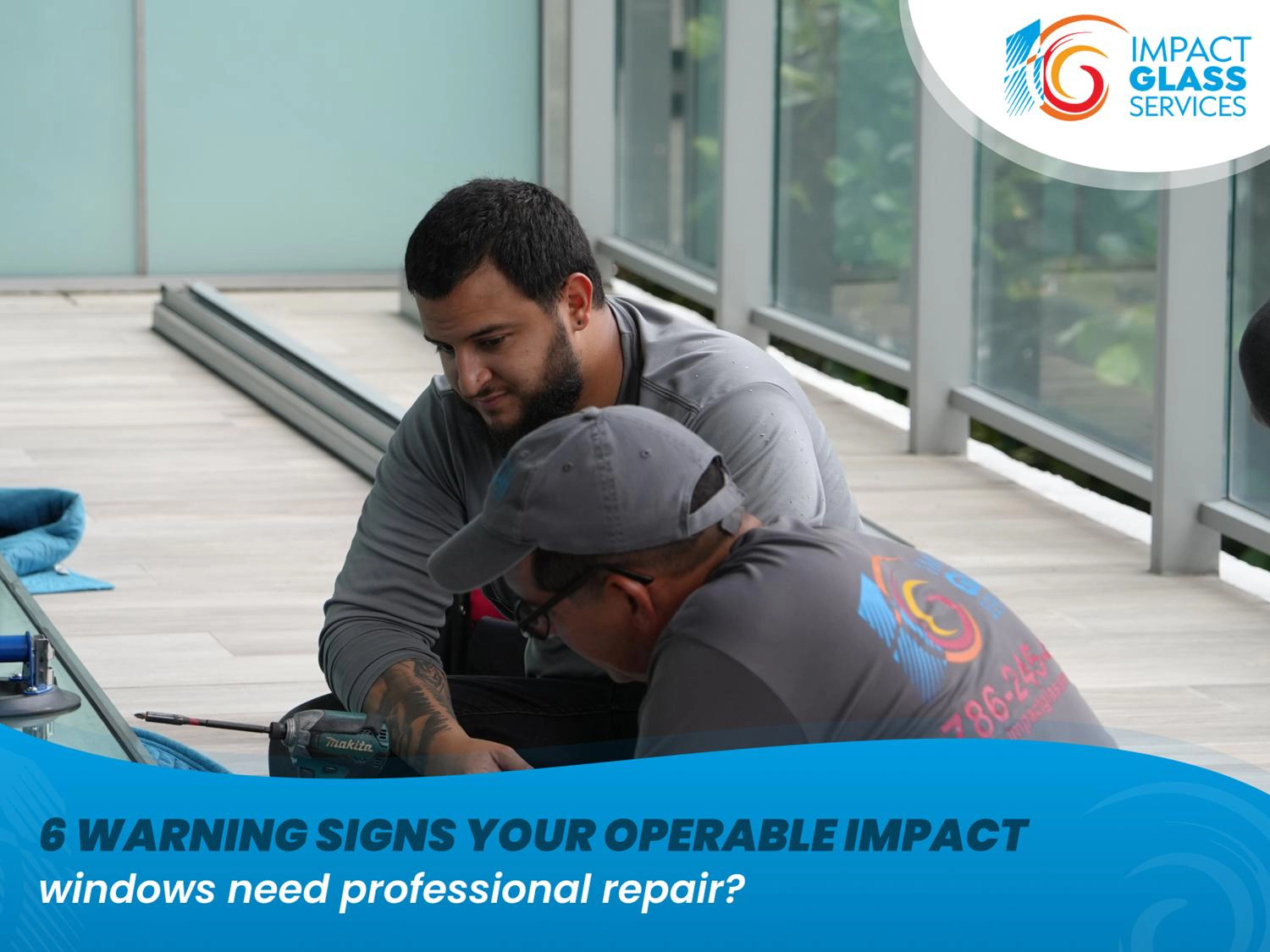
6 Warning Signs Your Operable Impact Windows Need Professional Repair
2026-06-19
1. When “smooth operation” turns into force and frustration
Operable impact windows are engineered to move smoothly—even under HVHZ pressure requirements. If you’re suddenly forcing the sash, cranking harder than usual, or feeling resistance halfway through operation, that’s not normal wear. In South Florida, salt air, concrete dust, and post-restoration debris often attack hinges, operators, and friction points. What feels like a minor inconvenience is usually early-stage mechanical failure that only gets worse if ignored.
2. Grinding, clicking, or metal-on-metal noises
Impact windows should be quiet. Any grinding, popping, or clicking noise is a red flag that internal components are out of alignment or corroding. This typically happens after concrete restoration, façade work, or years of coastal exposure. Aluminum shavings, rust particles, or worn operator gears indicate the window is operating outside its design tolerances—and continuing to use it can permanently damage the frame or sash.
3. Air or water leaks during storms (even if the glass is intact)
Many owners assume leaks mean glass failure—but that’s rarely the case. More often, the issue is compromised compression, warped sashes, or damaged weatherstripping. Impact-rated windows rely on precise closure geometry to maintain air and water performance. Once that seal is off—even slightly—you’ll feel drafts, hear whistling, or see water intrusion during wind-driven rain.
4. Visible corrosion on hinges, tracks, or operators
Here’s where things get serious. If you see white oxidation, bubbling paint, rust stains, or pitting on hardware, the window is already deteriorating internally. Coastal corrosion doesn’t stay cosmetic—it spreads behind the scenes, weakening load paths and stressing fasteners. Professional repair at this stage can often restore full function without replacement, but delay can push the system past the point of recovery.
5. The window won’t stay open or won’t fully close
This is a major safety and compliance issue. Operable impact windows are balanced systems—once that balance is lost, gravity and wind loads take over. Common causes include:
- Failed or undersized hinges
- Stripped operator gears
- Frame distortion after structural or concrete repairs
- Improper previous “handyman” fixes
- Accumulated debris inside the track system
If your window drops, slams shut, or refuses to lock properly, stop using it and call a professional immediately.
6. Locking issues or misaligned handles
The lock is the last line of defense in an impact window system. If the handle doesn’t align, the lock doesn’t engage smoothly, or you need to “lift and force” the sash to close, the window is no longer performing as designed. Beyond security concerns, this also means the window may fail pressure cycling over time—something no South Florida homeowner wants to discover during storm season.
Bottom line: Operable impact windows don’t fail overnight—they give warnings. Catching these signs early allows for targeted mechanical repairs, hardware restoration, and performance recovery without full replacement. If your windows are showing any of these symptoms, a professional inspection can save you thousands and keep your home storm-ready.
For more information or to schedule a free consultation, call Impact Glass Services at 786-245-4595 or visit www.impactglassmiami.com