


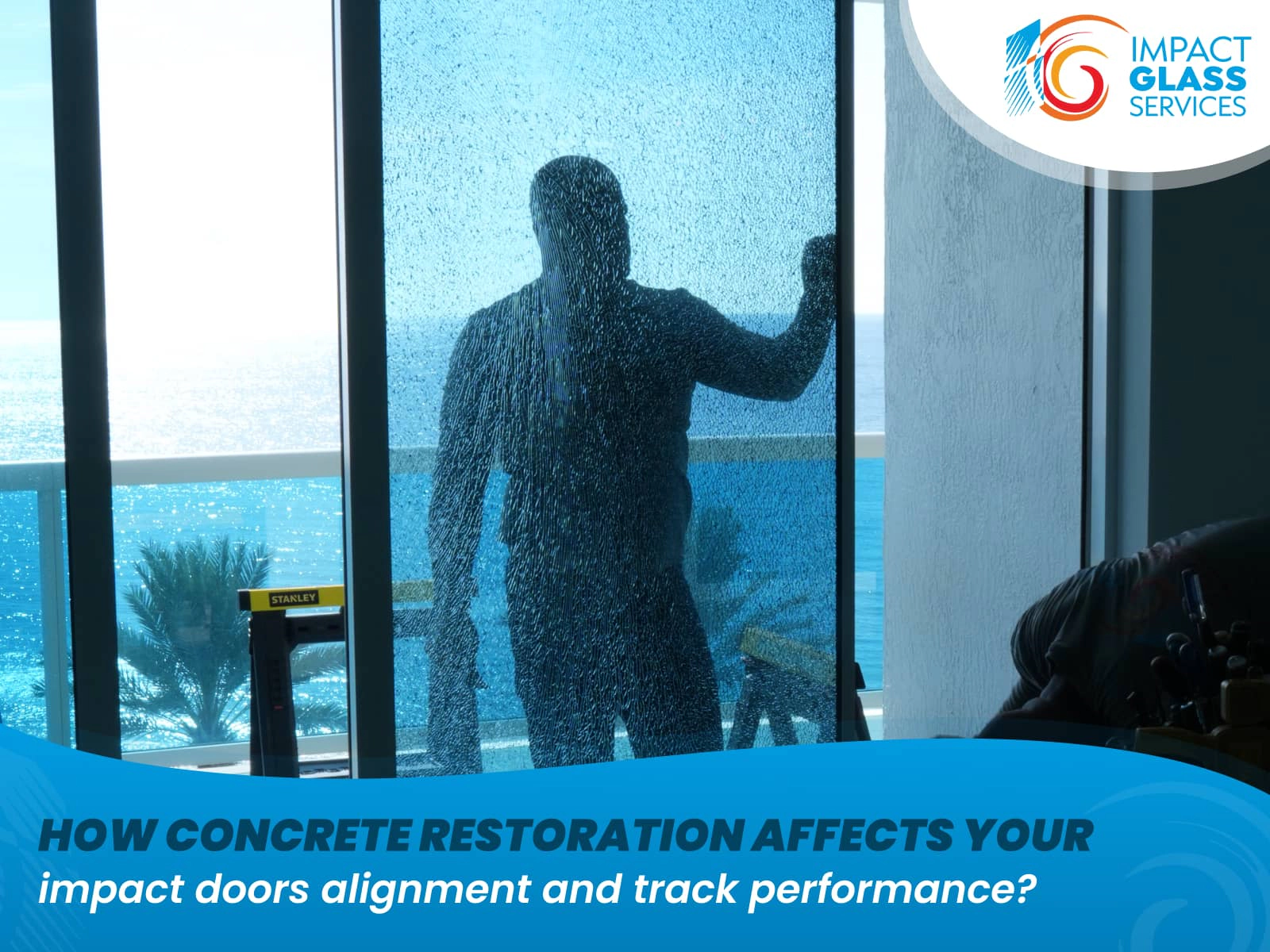
How Concrete Restoration Affects Your Impact Doors Alignment and Track Performance
2026-08-28
Structural Movement Starts Where You Don’t See It
Concrete restoration is essential for extending the life of South Florida buildings, but it almost always introduces micro-movement into slabs, balconies, and structural edges. When jackhammers, chipping tools, and rebar repairs are performed near impact doors, the surrounding concrete can shift slightly—even fractions of an inch. That movement transfers directly to door frames that were originally plumb, square, and level. Impact doors are engineered with tight tolerances, so even small shifts can knock the system out of alignment and immediately affect operation.
Frame Distortion Leads to Poor Door Alignment
Once concrete around an opening is repaired or resurfaced, the frame may no longer sit evenly on its original load points. This often causes racking, where one corner of the frame drops or twists relative to the others. The result? Doors that look fine visually but start rubbing, dragging, or popping when opened. Many owners assume this is “normal after construction,” but in reality it’s a clear sign the door geometry has been compromised and needs professional adjustment before permanent damage sets in.
Track Performance Takes the Biggest Hit
Sliding impact doors rely on precision tracks and rollers to handle heavy laminated glass panels. After concrete restoration, debris infiltration, track compression, or slab height changes can overload the system. Common performance issues include:
- Rollers carrying uneven weight, causing flat spots and premature failure
- Tracks packed with concrete dust that accelerates wear
- Thresholds no longer level, forcing panels to fight gravity
- Increased friction that stresses locks and interlocks
- Water intrusion due to altered drainage paths
Left unaddressed, these issues don’t just affect usability—they shorten the lifespan of the entire door system.
Why These Problems Rarely Show Up Immediately
One of the biggest challenges is timing. Many impact doors operate “well enough” right after restoration, only to fail months later. As the building settles and daily use continues, misalignment worsens and hardware starts to break down. By the time doors become hard to open or won’t lock properly, damage has already progressed beyond a simple adjustment. This delayed effect is why post-restoration inspections are critical, even if doors seem fine at first glance.
The Right Time to Inspect and Correct the Damage
The smartest move is scheduling a post-concrete-restoration door inspection before residents resume normal use. A professional evaluation checks frame alignment, roller load distribution, track condition, and hardware stress points. In many cases, targeted mechanical repairs and realignment can restore smooth operation without full replacement—saving owners and HOAs significant money. Concrete restoration protects your building, but only proper door servicing ensures your impact doors continue to perform as designed when storms, wind loads, and daily use put them to the test.
For more information or to schedule a free consultation, call Impact Glass Services at 786-245-4595 or visit www.impactglassmiami.com