


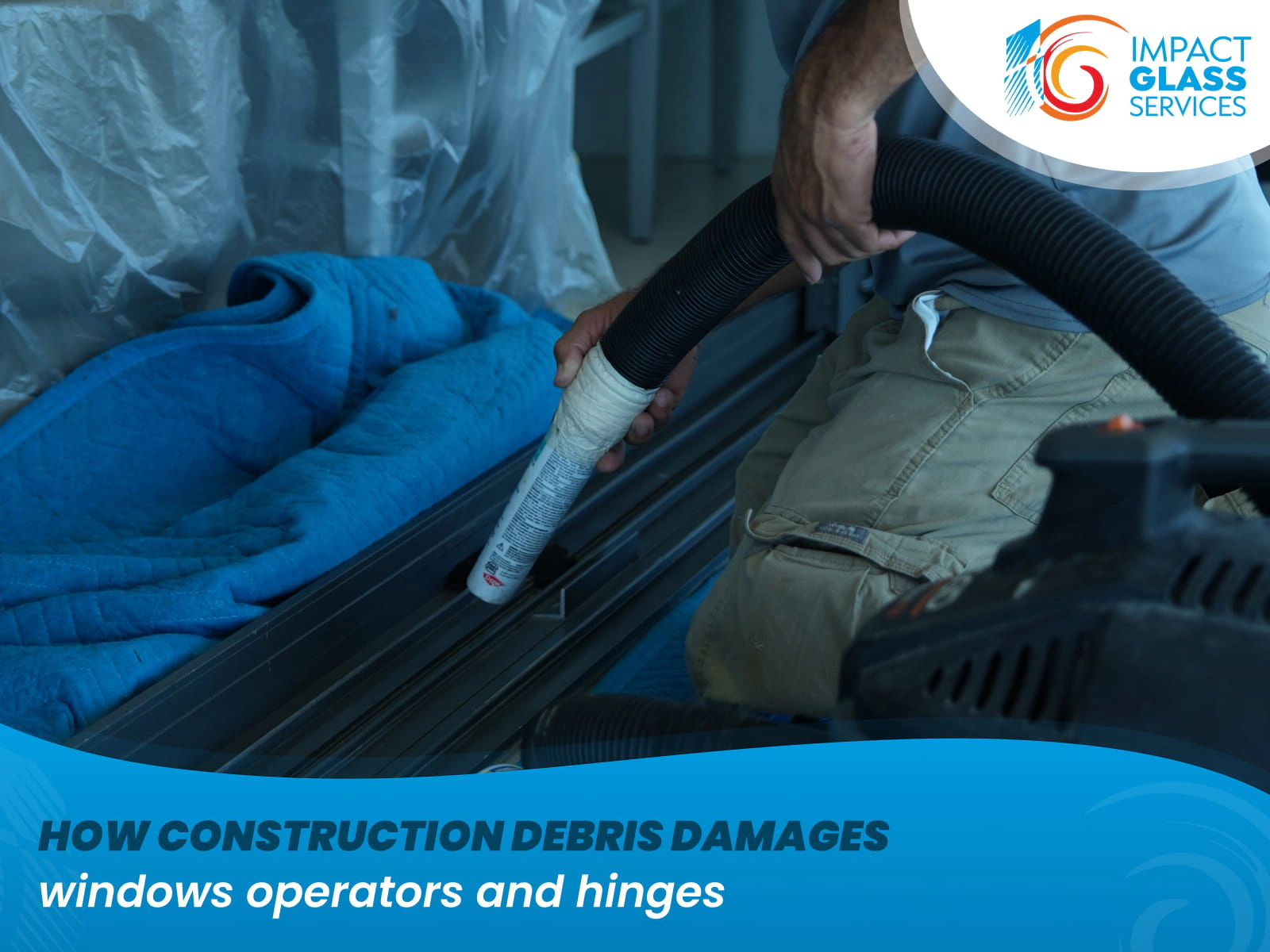
How Construction Debris Damages Window Operators and Hinges
2026-05-29
Fine Debris, Big Mechanical Problems
After concrete restoration or façade repairs, most owners focus on how the building looks—not on what’s left behind. Fine concrete dust, sand, and metal particles easily migrate into window operators and hinge assemblies. Once inside, this debris acts like sandpaper, grinding against gears, arms, and pivot points. In South Florida’s coastal environment, that dust also traps moisture and salt, accelerating corrosion inside components that are supposed to move smoothly and stay sealed.
Why Operators Are the First to Fail
Window operators—especially in casement and awning impact windows—are precision mechanisms. They rely on clean gear teeth, tight tolerances, and smooth rotation. Construction debris clogs grease, jams gears, and forces operators to work under resistance. Homeowners usually notice this as “stiff cranking” or uneven opening, but internally the damage is already happening. Keep forcing it, and stripped gears or bent arms are almost guaranteed.
Hinges Take the Silent Beating
Hinges don’t always fail immediately, which makes them dangerous to ignore. Debris settles into hinge knuckles and pins, mixing with humidity and salt air. Over time, this creates internal corrosion that increases friction and throws off sash alignment. The result? Windows that sag, rub the frame, or no longer close flush—compromising both water tightness and wind-load performance during storms.
Red Flags After Construction You Shouldn’t Ignore
If your building recently went through concrete restoration, these are the warning signs that debris damage may already be happening:
- Grinding, popping, or clicking noises when operating windows
- Operators that feel stiff, uneven, or suddenly harder to turn
- Windows that no longer stay open or drift closed
- Hinges showing white oxidation, rust staining, or binding
- Sashes rubbing the frame or failing to lock smoothly
Why Early Cleaning and Servicing Matters
The biggest mistake owners make is waiting until something breaks. Post-construction cleaning of tracks, operators, and hinges—followed by proper lubrication and adjustment—can prevent full hardware replacement. In many cases, professional servicing restores smooth operation and extends the life of original impact-rated components. After all, debris damage isn’t a defect—it’s a maintenance issue, and the sooner it’s addressed, the less expensive it becomes.
For more information or to schedule a free consultation, call Impact Glass Services at 786-245-4595 or visit www.impactglassmiami.com