


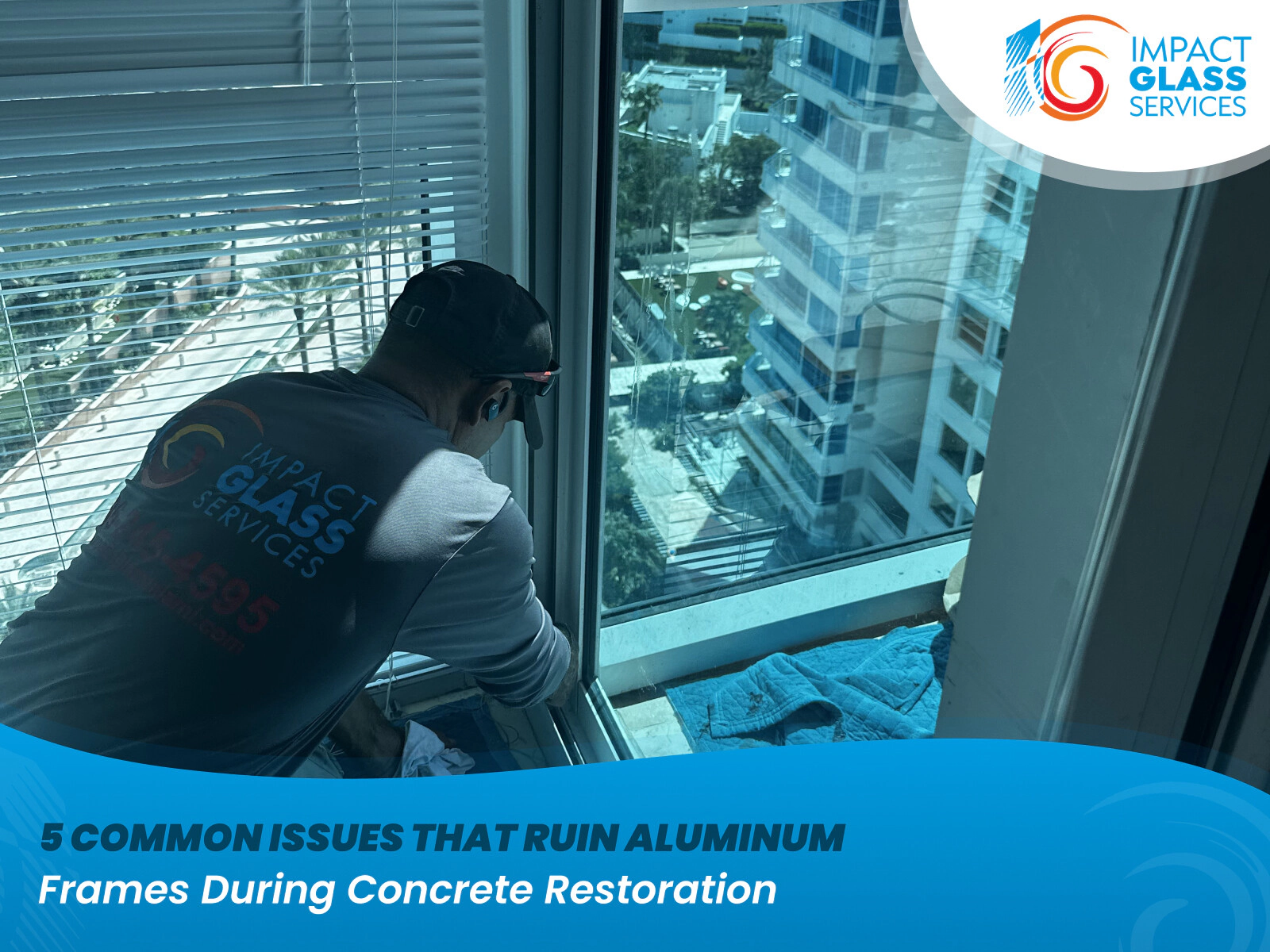
5 Common Issues That Ruin Aluminum Frames During Concrete Restoration
2026-03-11
Concrete Restoration Doesn’t Stop at the Slab—Your Frames Pay the Price
Concrete restoration is critical for South Florida buildings, but when it’s not properly coordinated, aluminum window and door frames often become collateral damage. During spalling repairs, balcony restorations, and facade work, frames are exposed to harsh chemicals, debris, and prolonged moisture. Many property managers only notice the damage months later—when corrosion, peeling paint, and hardware failure start showing up.
Chemical Overspray: The Silent Aluminum Killer
One of the most common frame-damaging issues during concrete restoration is chemical exposure. Acid washes, bonding agents, rust inhibitors, and waterproofing sprays don’t discriminate. When these materials land on aluminum frames, they strip protective finishes, weaken factory coatings, and trigger oxidation. Even “mild” cleaners can permanently stain anodized or painted aluminum if not neutralized quickly.
Trapped Moisture Accelerates Corrosion
Concrete restoration almost always involves water—pressure washing, curing, and rinsing. When water gets trapped behind frame perimeters or inside drainage channels, corrosion accelerates fast. Salt-laden air in coastal environments makes this even worse. Once moisture sits between aluminum and concrete, galvanic reactions begin, leading to bubbling paint, pitting, and structural degradation of the frame.
The 5 Most Common Issues That Ruin Aluminum Frames
These are the problems we see most often after concrete restoration projects across South Florida:
- Cement slurry buildup inside tracks and frame joints, causing operational failure
- Acid etching from masonry cleaners permanently burning the finish
- Mechanical damage from scaffolding, swing stages, and tools hitting frames
- Blocked weep holes, trapping water and accelerating internal corrosion
- Unprotected frames, left exposed without masking or temporary coatings
Each of these issues reduces the lifespan of impact-rated frames—and many are completely avoidable with proper planning.
Why Post-Restoration Frame Evaluation Is Essential
After concrete restoration wraps up, aluminum frames should never be assumed “fine.” A professional inspection can identify early-stage corrosion, coating failure, and sealant breakdown before full replacement becomes the only option. In many cases, electrostatic paint restoration and targeted metal repairs can restore both performance and appearance—at a fraction of replacement cost. The key is timing: the sooner frames are addressed after concrete work, the better the long-term outcome.
For more information or to schedule a free consultation, call Impact Glass Services at 786-245-4595 or visit www.impactglassmiami.com