


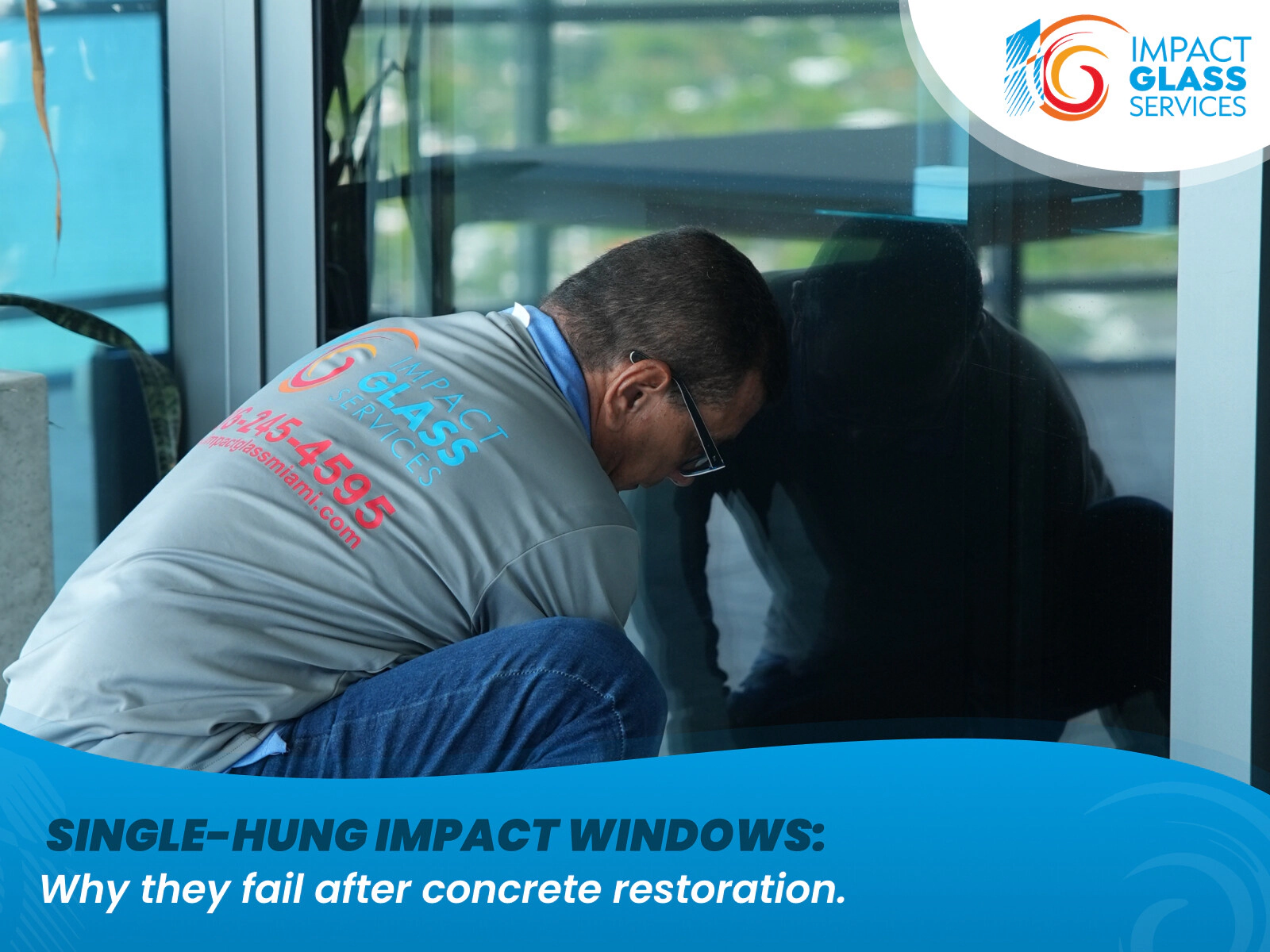
Single-Hung Impact Windows: Why They Fail After Concrete Restoration
2026-05-01
What Makes Single-Hung Impact Windows Especially Vulnerable
Single-hung impact windows are common in South Florida condos because they’re compact, code-compliant, and cost-effective. But their vertical operation and tight tolerances also make them far more sensitive to post-construction abuse. During concrete restoration, these windows are often left in place while jackhammers, grinders, and pressure washers go to work—creating the perfect storm for hidden damage that doesn’t show up until months later.
Concrete Restoration Residue: The Silent Window Killer
Concrete dust, slurry, and chemical cleaners don’t just make a mess—they invade the window system. Fine cement particles settle deep inside the balance channels and sill pockets of single-hung units. Once cured, this residue hardens like stone, restricting movement and throwing the sash out of alignment. The result? Windows that won’t open, won’t close, or feel “heavy” and unsafe.
Why Sills and Frames Stop Working the Way They Should
The sill is the most abused component during restoration. Improper masking or careless patching leads to uneven concrete buildup, blocked weep holes, and altered drainage paths. In coastal environments, trapped moisture mixed with alkaline concrete residue accelerates aluminum oxidation—especially on impact-rated frames that rely on precise tolerances to perform under pressure.
Common Failure Points After Restoration
After concrete work is completed, these are the most frequent issues we see with single-hung impact windows:
- Balance system contamination, causing the sash to drop or not stay open • Warped or buried sill tracks, preventing smooth vertical travel
- Blocked drainage and weep holes, leading to interior leaks
- Frame corrosion from alkaline exposure, compromising long-term strength
- Seal and glazing stress, reducing impact performance over time
- These failures are rarely manufacturing defects—they’re jobsite damage problems.
Why Inspection and Restoration Matter More Than Replacement
Replacing impact windows is expensive and often unnecessary. In many cases, professional frame restoration, sill re-profiling, and electrostatic paint repair can bring single-hung units back to factory-level performance—without affecting building approvals or aesthetics. The key is timing: the sooner post-restoration inspections happen, the easier (and cheaper) the fix.
Bottom line: concrete restoration doesn’t end when the scaffolding comes down. If your building has single-hung impact windows, proper inspection and restoration is the difference between long-term performance and premature failure.
For more information or to schedule a free consultation, call Impact Glass Services at 786-245-4595 or visit www.impactglassmiami.com