


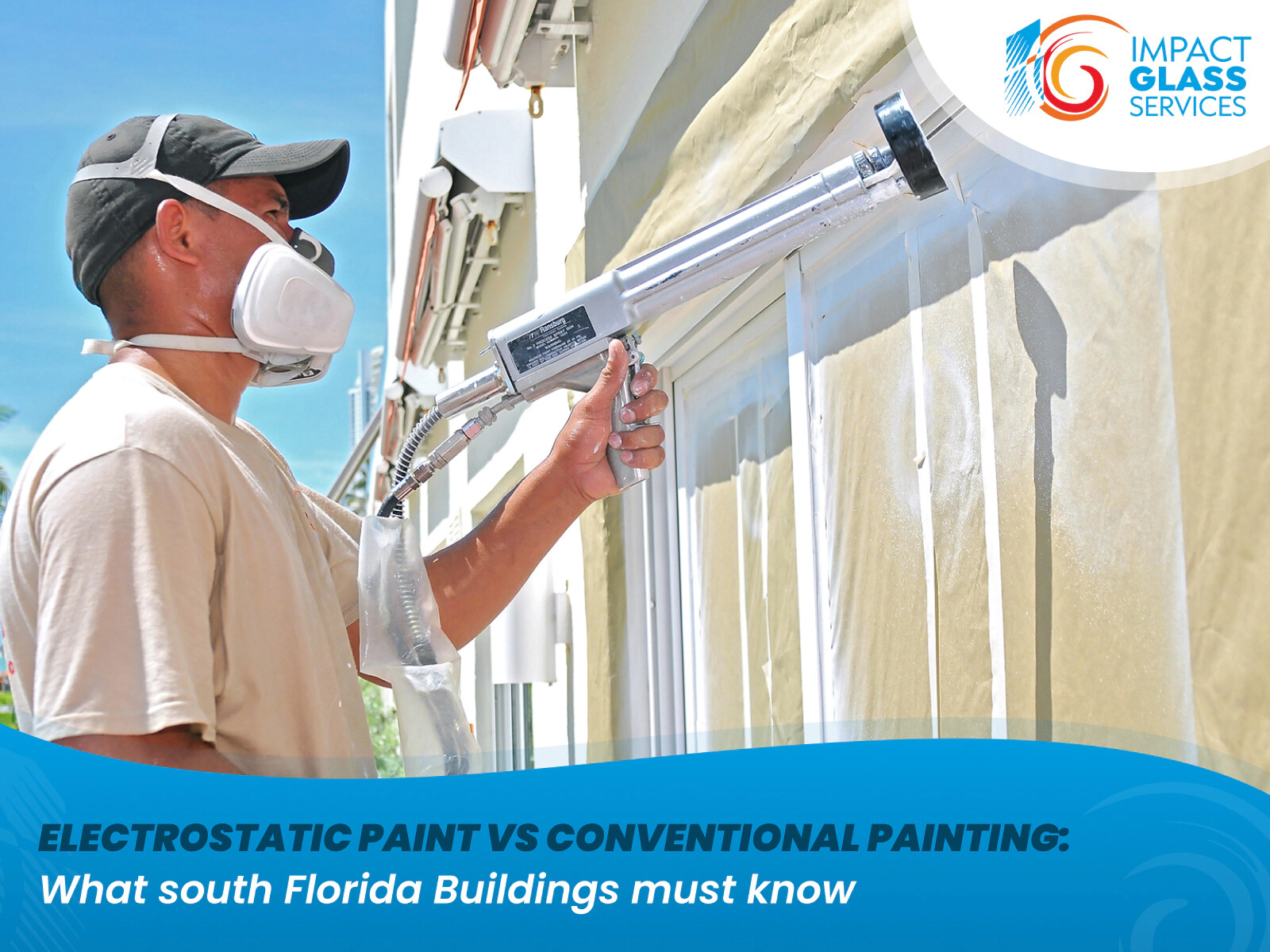
Electrostatic paint vs Conventional painting: What south Florida Buildings must know.
2026-02-25
What’s the Real Difference? Electrostatic Paint vs Conventional Paint
In South Florida’s brutal UV and salt-air environment, paint isn’t just aesthetics, it’s protection. Conventional painting uses rollers, brushes, or sprayers that lay pigment on a surface but can leave uneven thickness and runs. Electrostatic painting uses charged particles that magnetically cling to metal substrates (like aluminum frames on hurricane-impact windows and doors) for a super-even coat. The difference? Electrostatic gets into nooks and crannies with less overspray, which in Miami’s boom of condo towers and commercial facades means cleaner job sites and tighter coatings.
Durability in Harsh Climates: Why It Matters
South Florida buildings face sun, salt, humidity, and hurricane season. Conventional paint can chalk, fade, and peel faster under these conditions. Electrostatic coatings, especially when paired with powder coatings or urethane finishes, provide:
- High adhesion strength
- Uniform film build
- Resistance to corrosion
- Better retention of color and gloss
For steel, aluminum, and architectural metals, electrostatic paint doesn’t just look smoother, it lasts longer. Less frequent repainting means lower maintenance over time and less disruption for residents and tenants.
Cost & ROI: Smart Spending for South Florida Properties
At first glance, conventional painting looks cheaper — lower upfront labor and materials. But real value isn’t just about the sticker price. Electrostatic jobs often:
- Require less rework due to superior coverage
- Produce less waste and cleanup
- Lower long-term repaint cycles
- Reduce labor hours on site
So, while conventional may be cheaper today, electrostatic delivers better ROI over the building’s life especially in high-humidity, high-corrosion zones common in Miami-Dade and Broward.
Performance Breakdown: What You Really Get
Let’s break it down so building owners and contractors can evaluate in seconds what matters most:
- When Choosing Electrostatic Over Conventional, You Get:
- Wrap-around coverage, charged particles seek all surfaces, perfect for complex profiles
- Stronger adhesion, sticks like glue, resists delamination
- Weather resilience, UV and salt resistance that South Florida demands
- Cleaner, faster prep & finish, reduced sanding and fewer touch-ups
- Less overspray mess, big win for occupied buildings
This technical edge often translates into better client satisfaction and fewer punch-list headaches for contractors.
Best Practices for South Florida Buildings
To maximize performance and lifespan, here’s what buildings must know before choosing either finish:
- Surface Prep Is Non-Negotiable: No coating works on rusty or contaminated substrates.
- Choose the Right Formula: Polyurethane or powder over electrostatic priming dramatically increases UV/salt resistance.
- Climate Timing: Avoid painting during rainy, super-humid afternoons both methods need dry windows and doors to cure properly.
- Regulatory & HOA Compliance: Many South Florida HOAs have specific color and finish requirements coordinate with architects or impact glass partners early.
- Work With Certified Pros: Electrostatic equipment and application technique matters certified applicators get better wrap-around coverage.
For more information or to schedule a free consultation, call Impact Glass Services at 786-245-4595 or visit www.impactglassmiami.com