


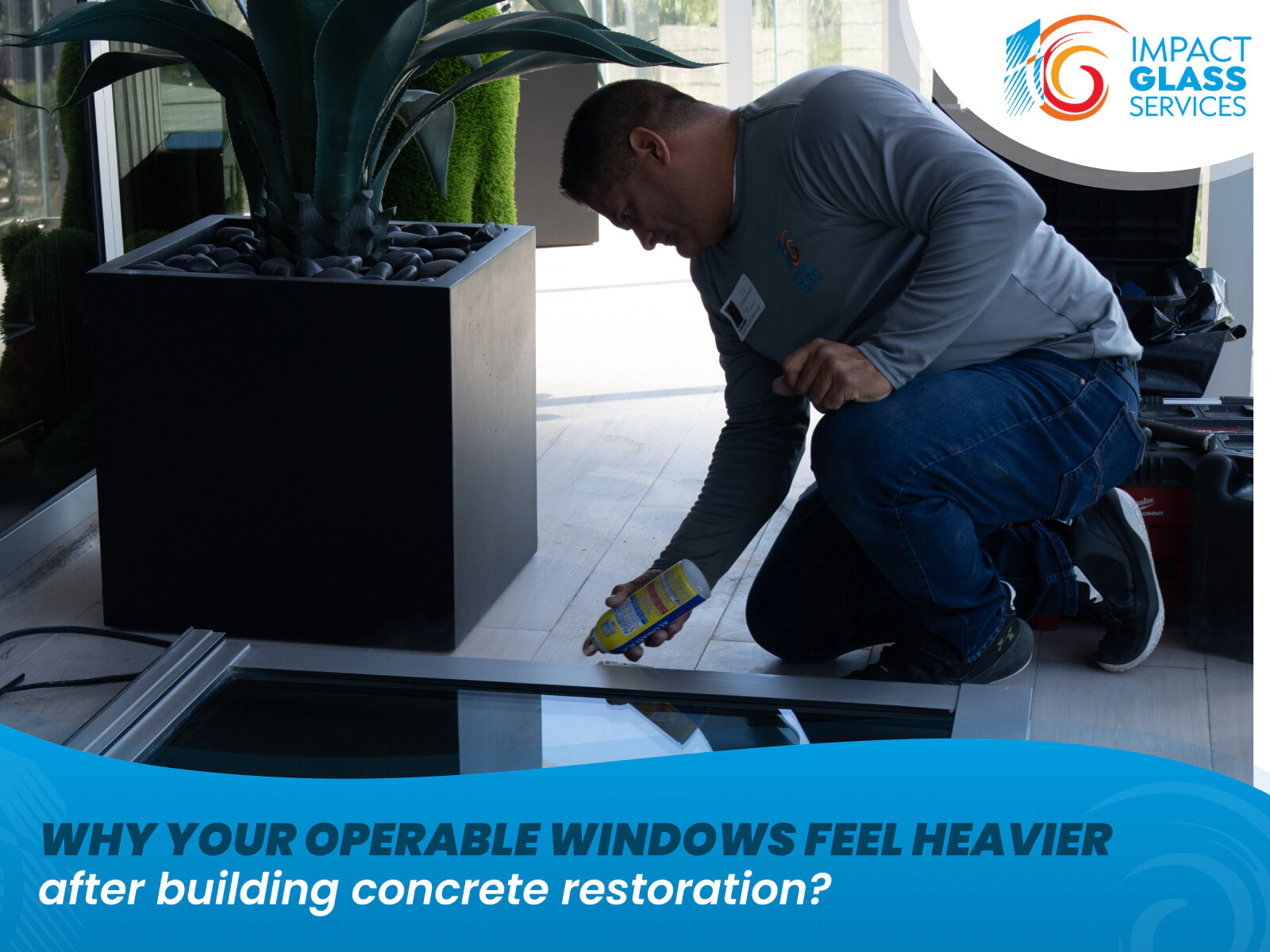
Why Your Operable Windows Feel Heavier After Building Concrete Restoration
2026-06-15
Concrete Restoration Changes More Than Just the Structure
After a building concrete restoration, many South Florida condo owners notice something odd: operable windows suddenly feel heavier, harder to open, or sluggish. This isn’t your imagination. During restoration, grinding, chipping, drilling, and resurfacing generate fine concrete dust and debris that spreads everywhere—including into window tracks, hinges, balances, and operators. Even impact-rated windows, built to handle extreme loads, are not designed to operate smoothly when their moving components are contaminated or slightly misaligned.
Dust, Slurry, and Debris Invade Window Mechanics
Concrete restoration creates alkaline dust and slurry that behaves like sandpaper inside operable window systems. Once this material gets into rollers, hinges, or balance channels, friction increases dramatically. What used to glide smoothly now feels heavy and forced. Over time, this debris can also accelerate wear on stainless hardware and aluminum tracks, making the problem progressively worse if it’s not addressed early.
Frame Movement and Subtle Misalignment After Structural Work
Concrete repairs often involve structural patching, spall repair, or slab edge restoration. Even when done correctly, this work can introduce micro-movements in window openings. A window frame that is off by just a few millimeters can throw off balance systems and hinge geometry. The result? The sash still opens—but it feels heavier, unbalanced, or uneven, especially on large impact casements and project-out windows.
The Most Common Reasons Windows Feel Heavier Post-Restoration
- Concrete dust buildup inside tracks, hinges, and operators
- Corrosion triggered by alkaline residue left on hardware
- Frame distortion or racking from slab edge or column repairs
- Dry or contaminated balance systems losing efficiency
- Overloaded hinges due to misalignment or added friction
These issues are extremely common after restoration and don’t automatically mean your windows need replacement.
Why Early Inspection and Professional Service Matters
When windows feel heavier, forcing them is the worst thing you can do. Extra force stresses hinges, cracks operators, and can even compromise impact ratings over time. A professional post-restoration inspection focuses on cleaning, neutralizing alkaline residue, realigning frames, lubricating or rebuilding balance systems, and restoring proper operation. Addressing these issues early extends the life of your impact windows, preserves safety, and avoids costly emergency repairs down the road—especially in high-rise coastal buildings.
If your windows started feeling heavy right after concrete restoration, it’s not normal wear—it’s a warning sign.
For more information or to schedule a free consultation, call Impact Glass Services at 786-245-4595 or visit www.impactglassmiami.com